Tomato Leaves Curling: Stress, Herbicide Injury, or Virus?
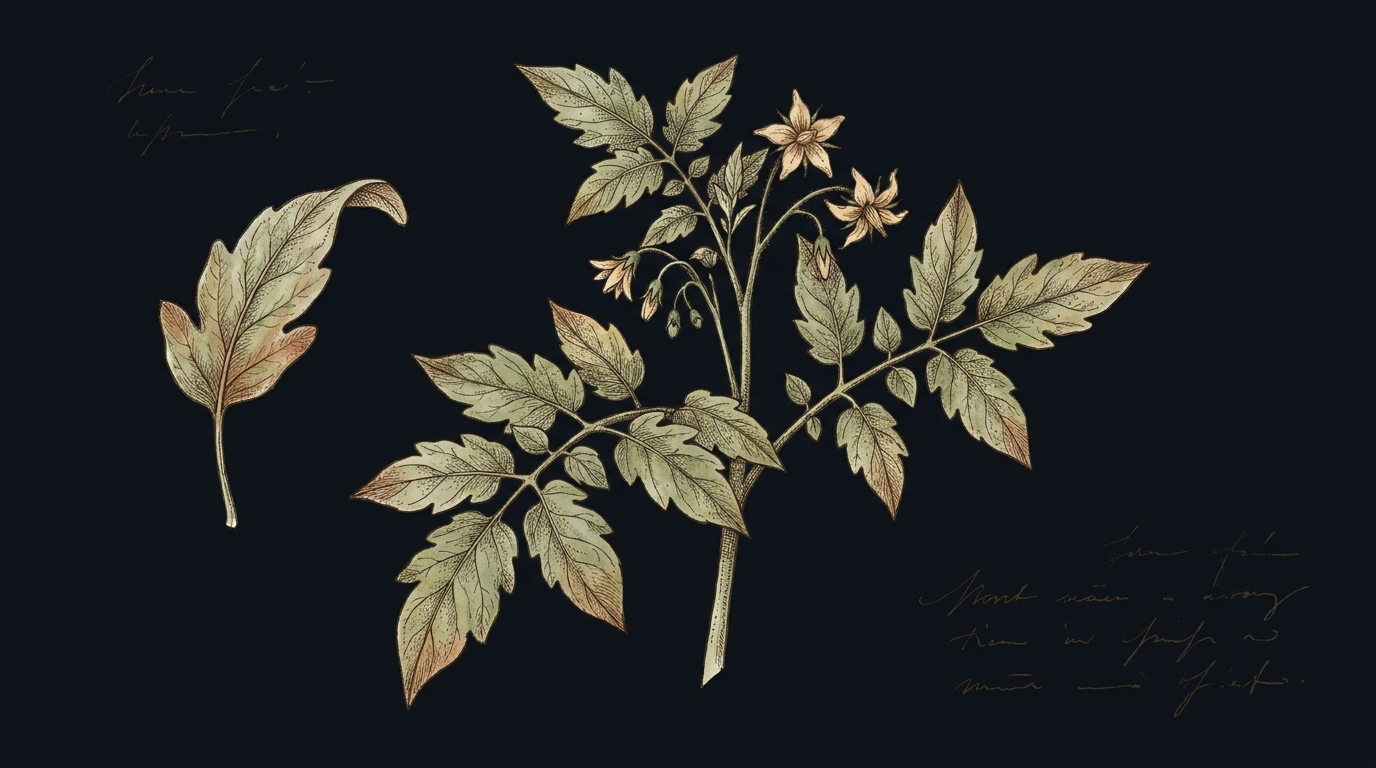
A tomato leaf can curl because of growing conditions, insect feeding, herbicide injury, or a virus. The first useful distinction is whether established leaves roll inward or new growth becomes distorted. Curl alone cannot identify the cause.
Before removing leaves or adding fertilizer, compare the affected plant with a nearby plant of the same variety. Look at the newest leaves, the lower leaves, and the fruit. Record what differs.
Read the rest of the plant
| Observation | What it brings into consideration |
|---|---|
| Leaves roll upward and inward and feel thick or leathery | Physiological leaf roll, including a response to drought stress |
| Twisted, cupped, or unusually narrow leaves | Herbicide injury and some viral diseases |
| Distorted leaves with patchy color and poor growth | A possible virus, among other causes |
| Clusters of small insects on affected leaves | Insect feeding, including aphids |
The University of Minnesota key to curled tomato leaves includes these overlapping patterns. It also notes that herbicide injury can be worse on the side nearest an application. That pattern is useful history, not proof of exposure.
Inspect the leaf undersides. A photograph of the upper surface can miss insects underneath. Record any insects separately from your guess about the plant’s disease.
When leaf curl raises a virus question
Tomato yellow leaf curl is one specific disease. UC IPM describes small leaves with yellow margins, upward cupping, and reduced growth. Whiteflies transmit the virus. Its presence and importance vary by location. See UC IPM’s tomato yellow leaf curl guidance.
Finding a whitefly does not establish that a plant has this virus. Finding a curled leaf does not establish it either. Ask a local plant clinic about testing when the answer changes whether you isolate or remove plants.
Keep the name “leaf curl” separate from “leaf curl virus” in your notes. The first describes a symptom. The second proposes a cause.
Record what a photo leaves out
Write down when the curl began, whether it affects older or newer leaves, and whether growth slowed. Add recent changes in watering, weather, fertilizer, or nearby spraying. Include new compost or mulch if its source is relevant to the investigation.
Take a whole-plant photo and a clear view of the growing tip. Add a close photo of an affected leaf with enough surrounding structure to show its position. Repeat the same views when the plant changes. A sequence gives an expert more context than a single tight crop.
If leaves wilt as well as curl, inspect soil moisture before adding water. Do not assume that every curled plant needs fertilizer. Several possible causes have nothing to do with a nutrient shortage.
What AI plant health diagnosis can add
PlantLab’s tomato coverage includes leaf_curl_virus. That class does not mean that the service covers every cause of curling. Physiological leaf roll and herbicide injury are not separate supported tomato classes.
Read a result alongside the rest of the plant and its history. A high confidence figure does not confirm a virus in a laboratory. If a result conflicts with your observations, keep that conflict visible and seek local advice.
Try a tomato photo in PlantLab, or read the plant health diagnosis API guide for software integration. The API accepts a photo. Keep your environmental observations in your own record so that a person can review them with the result.