PlantLab.ai | Blog

AI based plant health diagnosis

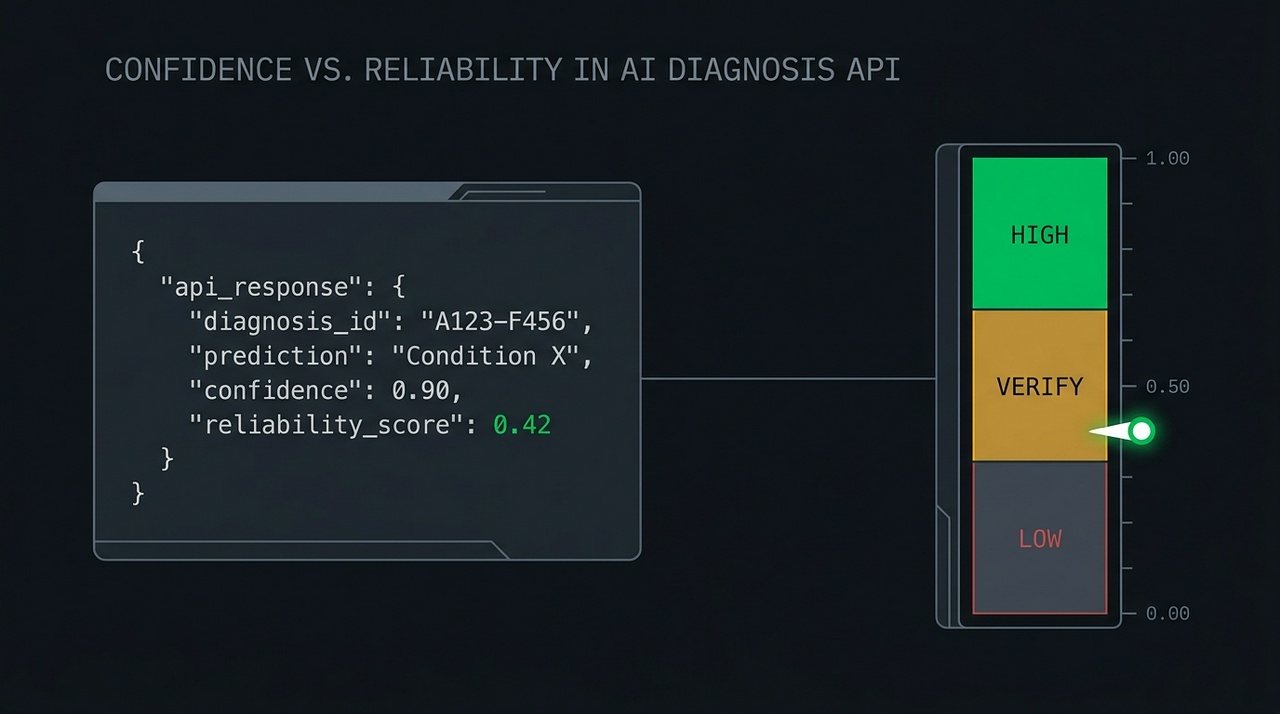
API response JSON showing high confidence but a low reliability_score, mapped onto a three-band trust gauge

The Short Version

Most plant diagnosis tools show you a confidence number. Confidence tells you how strongly the model picked an answer – not whether you should act on it. Those are different questions, and on a hard photo they get different answers: a model can be very confident and flat wrong. If you're feeding a diagnosis into an automation – a Home Assistant flow, a grow-room controller, a dashboard alert – the signal you actually want is reliability: how trustworthy is this answer, on this specific image? PlantLab returns both. Here's how to use each, and why automation should gate on reliability, not confidence.

Read more...

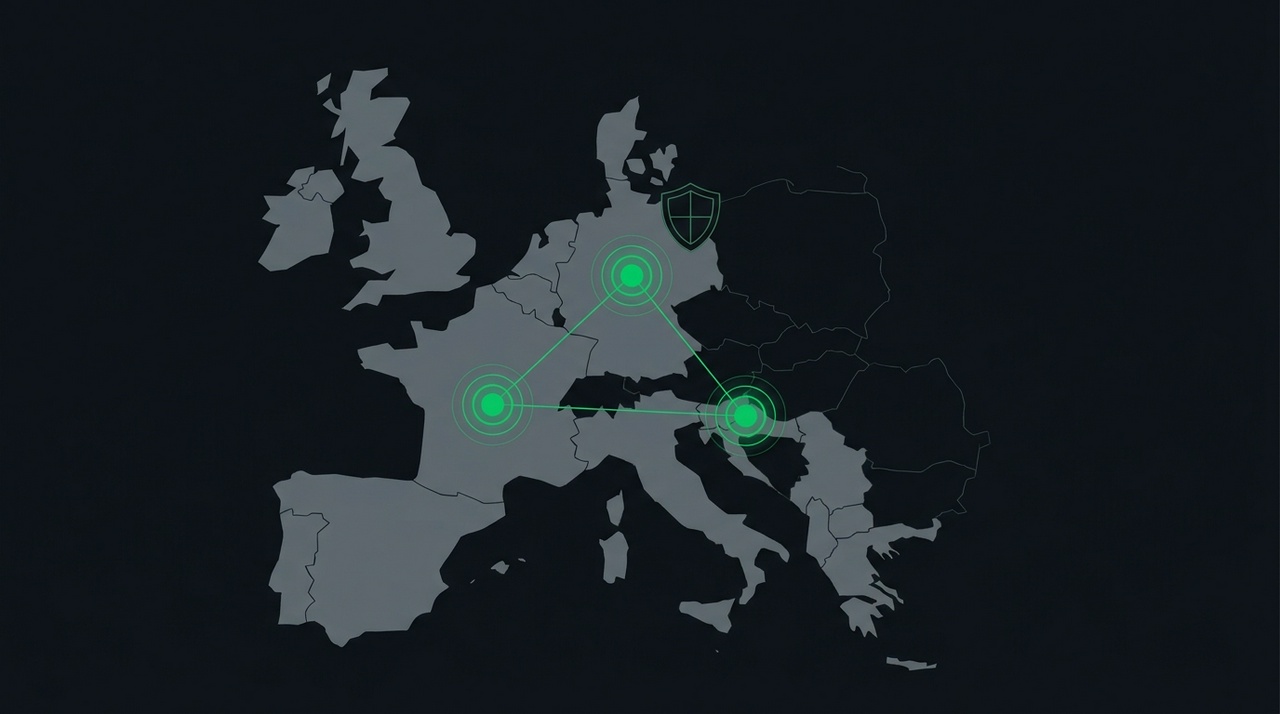
Map of Europe rendered in PlantLab's dark interface palette with bright markers over Germany, Slovenia, and France, representing distributed EU plant diagnosis infrastructure

Building on American cloud is the easy choice, which is exactly why almost everyone makes it. One account at Amazon, Google, or Microsoft and you get the whole stack in one place: compute, database, storage, DNS, email, all of it wired together, billed on one invoice, documented to death. It is a genuinely excellent product. It is also where PlantLab started.

It doesn't run there anymore. The diagnosis API, the database that holds your history, and the services around them now run on European infrastructure, and the live path a request travels – upload, inference, response, storage – never leaves the EU. That was not the easy choice. I want to explain why I think the easy choice and the right one were two different things here.

Read more...

World Class Cannabis Business Europe (WCCBE) 2026 logo

The Short Version

I spent two days in May chairing and speaking at World Class Cannabis Business Europe (WCCBE) in Frankfurt, on the subject of visual AI for cannabis cultivation. The biggest takeaway wasn't about the technology. It was about the gap between what the AI industry likes to talk about – autonomy, end-to-end automation, “AI runs the grow” – and what growers in the room actually asked for, which was something much more grounded. They want a tool that helps them decide, not one that decides for them. They want it to be specifically good at plants, not generically good at everything. Here's what I heard, and what it means for where PlantLab goes next.

Read more...

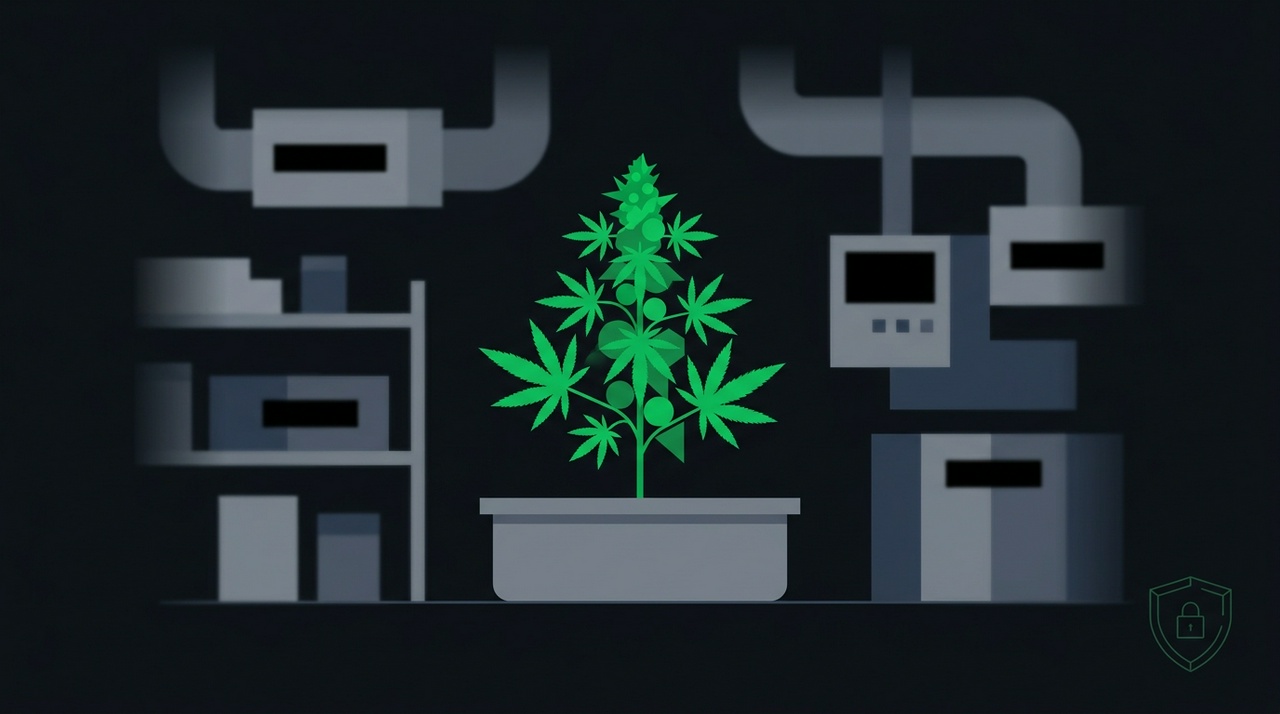
Healthy cannabis plant thriving inside a grow facility with the surrounding equipment anonymized for privacy

The Short Version

When you send a plant photo to a diagnosis API, you are not just sending a picture of a leaf. You are sending a signal about what you grow, roughly where, and sometimes at what scale. PlantLab treats that as sensitive data. Diagnosis history is kept only if you opt in, only for a bounded window, and the sensitive parts are encrypted at rest. Analytics are cookieless, the supporting infrastructure is moving toward EU providers, and your API key is shown once and never emailed back to you in full. None of this is glamorous. All of it is the difference between an API you can hand real grow-room data and one you can't.

Read more...

A row of green leaf markers along a thin timeline, with one larger and glowing brighter than the rest, suggesting a pattern recognized over time

A single diagnosis tells you what's wrong now. A history of them tells you whether you're getting better.

That's the gap PlantLab's new /history endpoint closes.

Read more...

The Problem Let's say you are a new or aspiring cultivator. You got some seeds, soil, nutrients, and the rest of your setup. You plant the seed and in a few days a little sprout starts growing. You hope that all goes according to the instructions you read or videos you watched. But at some point, your plant looks a little off. Perhaps the leaves are curling or its color changes. Something doesn't seem right. You search online, post photos on growing forums. You adjust pH, nutrients, lights. Sometimes the plant bounces back and sometimes it doesn't. You wish you could get a clear signal about what's going on, so you can actually address it.

Or perhaps you are an advanced grower, with a large tent or greenhouse. Daily, you walk and examine your plants, checking for signs of stress or pests. The more plants you have, the more chances something goes amiss and needs your attention. Your systems for lights, pH, water may be automated but they still need you: your vision and your experience.

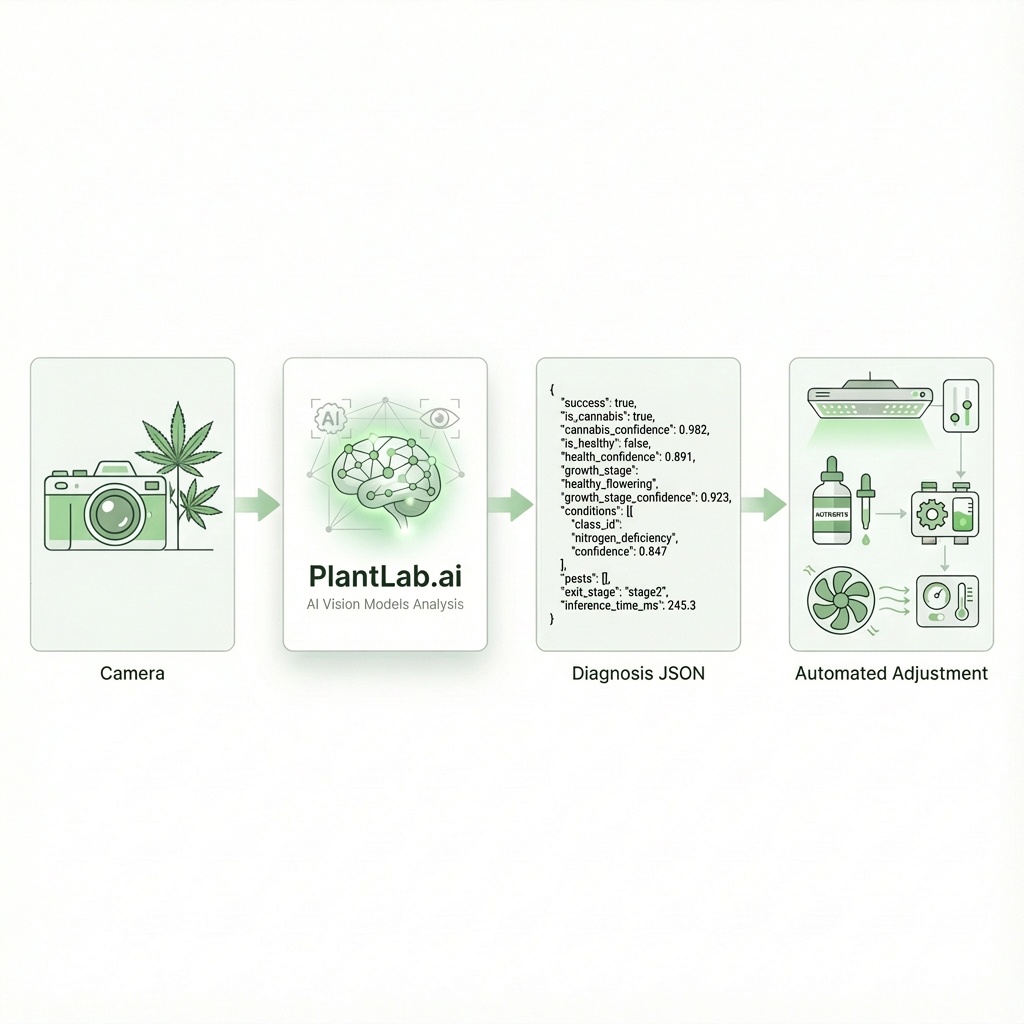
The Solution Now imagine a service that takes a photo, analyzes the state of your plant's health, and produces a structured response that your control systems can use to act autonomously. Not an app that gives you a diagnosis and leaves you to interpret it. Not a ChatGPT wrapper that overpromises because it was never trained on actual plant data. Rather, an essential part of your growing ecosystem—running continuously, alerting you when something is amiss, and providing enough information for your other systems to auto-correct.
Why I Built It

I tried the apps. I tried uploading photos to ChatGPT. The apps gave me generic advice. The AI chatbots hallucinated confidently—telling me I had calcium/magnesium deficiency when it was clearly light burn. None of them were trained on actual cannabis data, and it showed.

So I built my own. I collected thousands of real plant images, labeled them, trained models specifically for cannabis diagnostics. Not because I wanted to start a company, but because I wanted something that actually worked for me and others like me.

What PlantLab Is This is PlantLab: an AI trained specifically on cannabis plants to identify health issues with speed and accuracy. I built and trained these models myself, on real plant data, because I wanted the tools I use in my own grow to actually work. PlantLab gives you an expert eye on your grow 24/7, producing output that your automation systems can interpret and act on.

Your Data, Your Privacy Your images are not stored. Your data stays yours. And if you need it, PlantLab can run completely offline and on-premise, for air-gapped environments where privacy is non-negotiable.
Enter your email to subscribe to updates.